
Diverse Corn Belt
Project

The Diverse Corn Belt (DCB) is a multidisciplinary project exploring alternative crops, longer rotations, and integrating livestock and perennials that could help increase resilience in Midwest agriculture – is seeking farmer input through focus groups and in-field research. The project’s 30 partners are exploring diversification at the farm, market, and landscape level that can broaden new opportunities for Midwest farmers and rural communities, says Dr. Linda S. Prokopy of Purdue University, who leads the five-year, $10 million project.
The study focuses on Indiana, Illinois, and Iowa. The team will conduct research, extension, and modeling in all three states.
Prokopy says farmers can participate in the Diverse Corn Belt in a variety of ways, including:
- Focus groups, in which producers with a wide range of approaches—from traditional corn/soybean rotations to highly diversified operations—gather to discuss the challenges and opportunities posed by diversification.
- Hosting in-field research, allowing agronomists, entomologists, hydrologists and soil scientists to study farmers’ existing management systems, ranging from conventional corn/soybean rotations to more complex cropping and/or grazing systems. Host producers will not be asked to change their management; researchers will share and help interpret data produced on participating farms.
- Joining Reimagining Agricultural Diversification (RAD) Teams, engaged conversations among producers, agricultural advisors, community leaders, and others. RAD Team members will work closely with the research team—and each other—over the next five years to share their insight on research findings, explore policy implications, and envision what the agricultural landscape of the Midwest should look like in the future.
The Diverse Corn Belt project is funded by the USDA National Institute of Food and Agriculture through an Agriculture and Food Research Initiative competitive grant. Members of the research team represent land grant institutions, federal agencies, and non-profit organizations. CTIC is helping with communications for the project.
Interested farmers and other stakeholders can learn more about the Diverse Corn Belt project at diversecornbelt.org, and volunteer to participate at https://bit.ly/GoDCB.
Current Projects
Past Projects

Sign up for our Newsletter
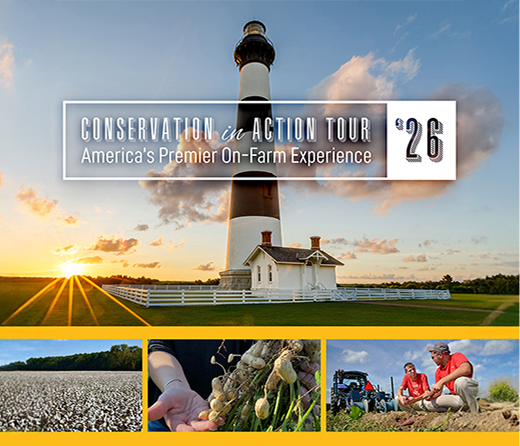
June 2026 | Raleigh, North Carolina
Conservation in Action Tour | America’s Premier On-Farm Experience
Related News
Indiana’s Farm Advisors Mentoring Program Flattens Learning Curve for Regenerative Agriculture
If someone asked you to name five winners from this year’s Winter Olympics, could you identify them? But if someone asked about your five favorite teachers from your entire school career, could you name them immediately? Our favorite teachers–and their lessons–stick with us. So do lessons from mentors. Farm Advisors in Indiana recognizes the importance…

CTIC, SARE, and USDA Unveil 2026 Cover Crop Report at Farm Progress Show; Publish Webinar and Presentation
Results of the 2026 National Cover Crop Report indicate strong interest in cover crops among many farmers who produce a wide range of crops and livestock. Among respondents to the national survey, the average acreage planted with cover crops was 397.9, and their projections anticipate crossing the 400-acre mark by next year, a 33% increase…

2026 National Cover Crop Report Shows Continued Expansion Of Cover Crop Use, Including Cover Crop Grazing, Use Of Drones, And Planting Patterns
Farmers with 10+ years of experience help provide insights into incentive program design, monetization, and management practices that drive returns on investment. INDIANAPOLIS — Results of the 2026 National Cover Crop Report released Sept. 1 at the Farm Progress Show indicate strong interest in cover crops among many farmers who produce a wide range of…