
Systems Working for the Soil: Z3 Agriculture, Conservation in Action Tour Farm Stop Host
CTIC News

Optimizing every asset on the farm includes putting the soil to work.
That’s according to Zeb Winslow III of Scotland Neck, North Carolina. He’s a farm stop host for CTIC’s 19th annual Conservation in Action Tour.
Winslow operates Z3 Agriculture, a corn, soybean, and cotton operation using no-till and cover crops on 100% of their acres.
In college, he majored in economics and accounting. After graduation, he worked in transportation and warehousing, focusing on timing and asset utilization.
That experience drives not only his farm and equipment decisions, but it also drives his soil decisions.
“The most expensive thing that you will rent or buy over the course of your farming career is sitting dormant for 75-80 percent of the year,” Winslow says. “It should be doing something. The soils weren’t designed to lay empty for that amount of time.”
Farm Changes Throughout Five Generations
Winslow is a fifth-generation farmer on an operation that has seen many different types of agricultural production: mules, dairy cows, farrow-to-finish hogs, peanuts, and today’s mix of corn, soybeans, and cotton.
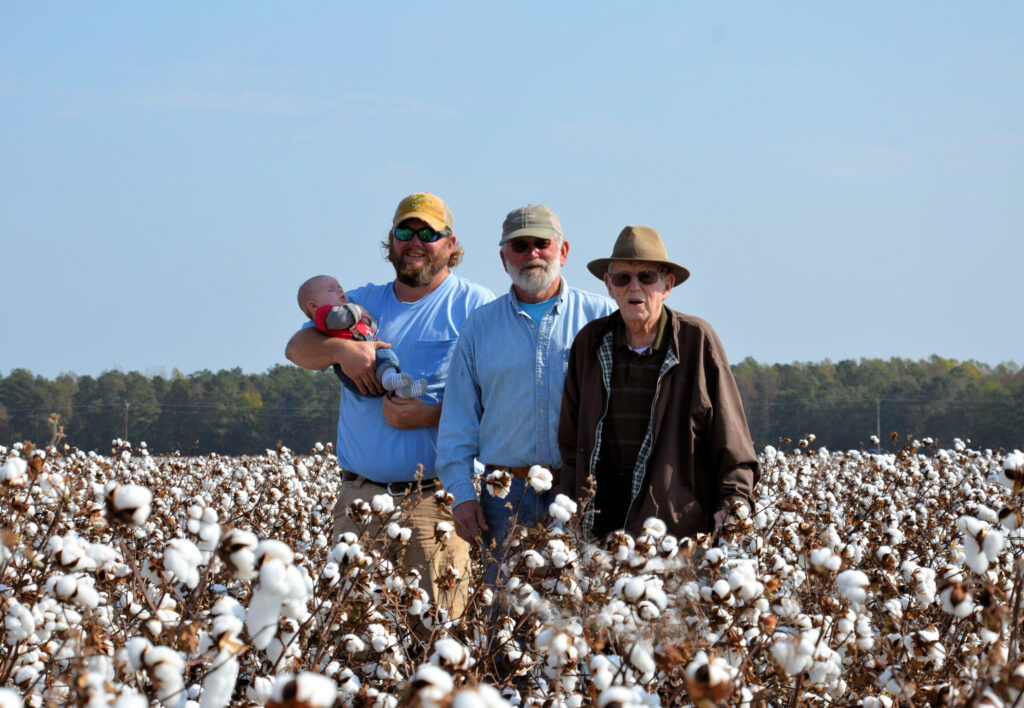
Winslow says the farm has evolved with its conservation and production systems to maximize the results of their soil health production system.
“A lot of that grew out of the work that my father did before me,” Winslow says. “He’s always very much on the cutting edge or pushing efficiency on the farm.”
In the mid-1990s, Winslow and his father, Zeb Winslow, Jr., started using reduced tillage systems, like strip-till, with a single species cover crop. In 2013, they planted their first multi-species cover crop.
By spring, the plants were waist-high. Winslow’s father asked him how he would plant into the cover crops.
For advice, Winslow talked with Jay Brandt—his father David was inducted into the CTIC Hall of Fame during the 18th annual Conservation in Action Tour for his no-till pioneer work in Ohio.
After hearing about Winslow’s set-up, Brandt said, “Go plant into it green.”
To say the least, Winslow, Jr. was skeptical. But Winslow replied, “Give me one day. If I can’t figure it out and make it work in one day, we’ll spray.”
So, when conditions were right, Winslow planted directly into the cover crop.
“It was some of the best planting conditions we’d ever had,” Winslow said. “We had more soil moisture than we normally would have had; the tilth of the soil, just the way that it shaped up, you knew by the way it looked when you put the seed in the ground that you were onto something.”
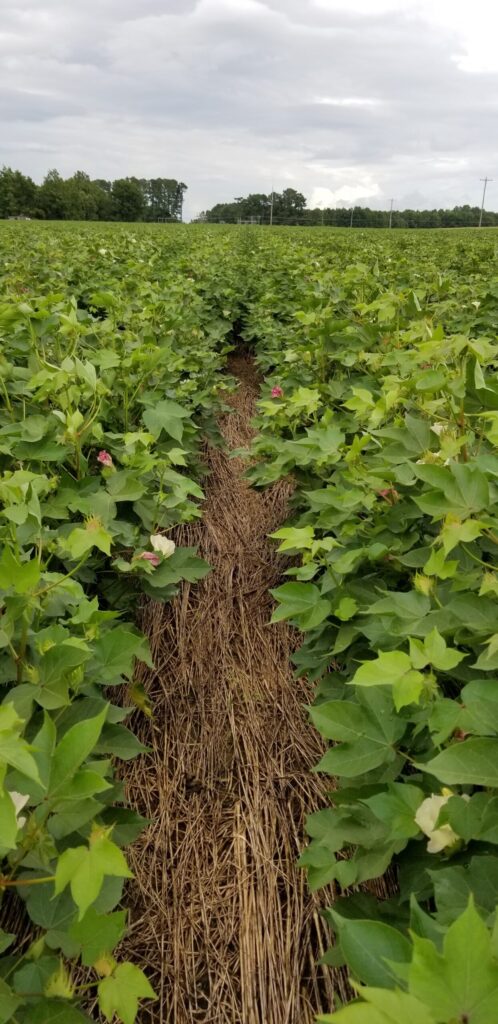
Winslow says throughout the 2014 growing season, he and his father saw noticeable differences: a higher biomass cover crop that hung onto more moisture, as well as less competition from weeds. Those benefits sealed the deal, and they’ve now been planting intensive cover crops for 13 years.
His work with conservation systems earned Winslow recognition as a finalist for the 2025 Carolinas Leopold Conservation Award.
Rooted in Improvement
Winslow says they’ve experimented with seeding rates. Even with reduced rates, he says the farm has still benefited from the cover crops.
“The largest part of how you’re going to influence the characteristics of your soil and the biology of your soil is going to happen through that cover crop root,” Winslow says. “The aboveground biomass is a place for our beneficial insects and all of our above-ground livestock to live. It’s habitat, shelter, and food for them. But what’s really moving everything along are the roots and what the roots are doing in the ground.”
Having a living root year-round with both row crops and cover crops makes sense when managing a land investment, Winslow adds.
“Whether you’re renting land or whether you’re buying it, our soils are without a doubt the biggest investment that any farmer is ever going to make,” Winslow says.
He says that just as equipment is cleaned after use and kept in a shed for shelter from the elements, the land needs cared for and improved, as well.
“Improving the land is one of the most important things I can do to ensure the longevity of my operation and agriculture in general,” Winslow says. “They’re not making any more land.”
On-Farm Research and Data Guide Decisions
To optimize his soil asset, Winslow has designed research trials for his production system and tracked data for seven years.
In one trial, he tracks the soil test values for a 10-acre section in the middle of a 30-acre field that does not receive lime, phosphorus, or potassium. He says the soil test values haven’t dropped so dramatically that they affect his crop.
“There’s something going on where we’re able to cycle nutrients from deeper in the soil profile with cover crops that’s making the nutrients more available,” Winslow says.
He says with the cover crops, they’ve been able to reduce their nitrogen rates in cotton from 120 units to 80-90 units per acre, depending on the weather.
With fewer passes and no rippers, Winslow says he also saves ten gallons of diesel fuel per hour. With diesel prices in his area at $5.79 on April 1, 2026, he’ll be saving nearly $600/day when he works ten-hour days.
He emphasizes that no two farm systems are alike and on-farm research is important for understanding the best way to manage an operation.
“No one’s soil is going to be identical to yours,” Winslow says. “You’re creating that experiment and conducting that experiment in the same way that you’re going to grow your crops.”
What’s Next?
When the Winslows first implemented their conservation system, Winslow was excited to see the drastic changes in moisture retention, soil temperature, and weed suppression with the cover crops.
“Once you see something work and you can tell that you’re on to something, it gets me fired up to see, ‘What else can we get out of this?’” he says.
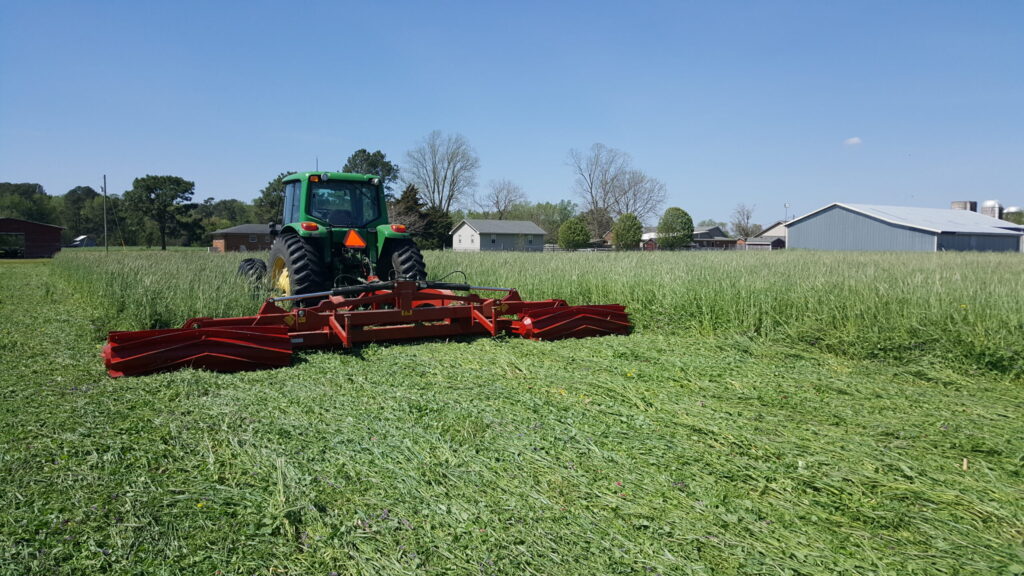
For the future, he’s analyzing an increase in variety of cover crop species. He’s also considered grazing cover crops, whether he adds cattle or other ruminants himself or partners with a producer to graze the cover crops.
Winslow says there are benefits to having livestock on crop ground, for both additional income and the soil.
“With how much it does for your soil health and for everything that’s going on underground, it just seems like that’s the next logical step,” Winslow says.
Visit Z3 Agriculture
During the 19th annual Conservation in Action Tour June 3-4, you can visit Z3 Agriculture and see the conservation system that’s building profitability and economic benefits for the farm. See the full agenda, speaker line-up, and hotel information here, and register today.
Categories

Sign up for our Newsletter

June 23-24, 2027 | Madison, Wisconsin
Conservation in Action Tour | America’s Premier On-Farm Experience
Related News

Viridis View to Launch at Sustainable Ag Summit to Track Progress for Regenerative Agriculture
The data viewer will provide near-real-time, county-level data sets on the use of cover crops and conservation tillage practices to strengthen decision-making for U.S. agriculture. The Conservation Technology Information Center (CTIC) is proud to organize and lead Viridis View, a new conservation benchmarking collaborative designed to improve the measurement, understanding, and application of conservation practice…
Indiana’s Farm Advisors Mentoring Program Flattens Learning Curve for Regenerative Agriculture
If someone asked you to name five winners from this year’s Winter Olympics, could you identify them? But if someone asked about your five favorite teachers from your entire school career, could you name them immediately? Our favorite teachers–and their lessons–stick with us. So do lessons from mentors. Farm Advisors in Indiana recognizes the importance…

CTIC Welcomes New Member Organizations
CTIC is proud to welcome four new member organizations to its growing roster of multidisciplinary stakeholders to support our shared mission of supporting farmers in their adoption and expansion of regenerative agricultural practices. Nuveen Natural Capital, Landoption, Terion AI, and Millborn Seeds have become first-time members of CTIC and are eligible for Board Director positions…