
About
Project: Indian Creek Watershed

Facilitated by CTIC, local farmers and interested others lead this project to demonstrate and test best conservation practices on Indian Creek Watershed farms.
The project, sponsored by the Illinois Environmental Protection Agency (with funds provided through Section 319 of the Clean Water Act) will show how conservation practices installed on Indian Creek watershed farms will affect water quality.
Goal
Determine what water quality improvements result when 50-75% of producers and acres in a small watershed adopt comprehensive agriculture conservation systems over a six-year period.
Activities
- Outreach activities include field tours, public meetings, email and website updates, news releases and more.
- On-farm demonstrations showcase the latest products, techniques, equipment and tools for resource conservation.With funding from USDA, CTIC will employ tile outlet monitoring to measure water quality.
- CTIC and Livingston SWCD partner with Argonne National Laboratories to study the growth and water quality effects of bio-energy crops in the Indian Creek watershed.
- Through a USDA Mississippi River Basin Initiative grant, USDA-NRCS and Livingston County SWCD provide financial assistance to farmers implementing best resource management practices.
- Every farmer in the watershed will be contacted to implement conservation practices/systems.
Illinois native Dr. Harold F. Reetz, Jr. leads design and oversight of demonstration and testing plots. These will measure the effectiveness of how farmers manage fertilizer and manure and will demonstrate systems of best management practices for reducing negative effects on water quality in Indian Creek and downstream.
Indian Creek Watershed
The 82-square mile drainage area (52,480 acres) of Indian Creek Watershed flows to the South Fork of the Vermilion River, one of USDA’s Mississippi River Basin Initiative focus areas.
Agriculture dominates the watershed – 95 percent of the land is tillable, most in a corn/soybean rotation, although there are numerous livestock operations. The average farm size is 500 acres.
The City of Fairbury, the only urban population within the watershed, consists of approximately 4,000 people.
The major resource concern for Indian Creek watershed is water quality, particularly nitrate levels. Located in the southern portion of Livingston County, the watershed drains northward to the Vermilion River and the cities of Pontiac and Streator.For more information about the project, contact Chad Watts, CTIC project director, at [email protected].
Current Projects
Past Projects

Sign up for our Newsletter

June 23-24, 2027 | Madison, Wisconsin
Conservation in Action Tour | America’s Premier On-Farm Experience
Related News

Viridis View to Launch at Sustainable Ag Summit to Track Progress for Regenerative Agriculture
The data viewer will provide near-real-time, county-level data sets on the use of cover crops and conservation tillage practices to strengthen decision-making for U.S. agriculture. The Conservation Technology Information Center (CTIC) is proud to organize and lead Viridis View, a new conservation benchmarking collaborative designed to improve the measurement, understanding, and application of conservation practice…
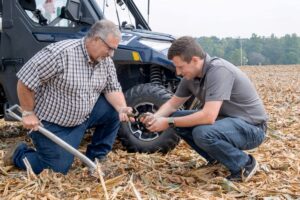
Indiana’s Farm Advisors Mentoring Program Flattens Learning Curve for Regenerative Agriculture
If someone asked you to name five winners from this year’s Winter Olympics, could you identify them? But if someone asked about your five favorite teachers from your entire school career, could you name them immediately? Our favorite teachers–and their lessons–stick with us. So do lessons from mentors. Farm Advisors in Indiana recognizes the importance…

CTIC Welcomes New Member Organizations
CTIC is proud to welcome four new member organizations to its growing roster of multidisciplinary stakeholders to support our shared mission of supporting farmers in their adoption and expansion of regenerative agricultural practices. Nuveen Natural Capital, Landoption, Terion AI, and Millborn Seeds have become first-time members of CTIC and are eligible for Board Director positions…