
Seven Reasons to Be Thankful
CTIC News, Economics & Profitability

There might not be many people who are sad to see the end of 2025. Maybe gold traders. Maybe generative AI developers. But for aggies, we might be ready to turn the page.
There’s no need to recount the litany of factors that made “uncertainty” the hallmark for the year, and even while some challenges persist, they seem to fade with the season like the rumble of the combine, neutralized by the post-harvest slumber and the gratification of grain in the bin.
Successes are sweeter in turbulent years, and they should be celebrated. In the spirit of the holiday, we’re sharing some things that keep us motivated in our work and for which we are thankful:
- Remarkable resilience amid uncertainty: Farmers generally grew a healthy crop this year despite trade volatility, weather, and markets that penalized them for their productivity. Producers continue to deliver a reliable abundance of food, feed, fiber, and fuel that support households and industries across the country, and their ability to adapt, adjust, and persevere remains one of the strongest anchors in the agricultural economy.
- Accelerating innovation that drives all sectors: Technology and data are reshaping the way decisions are made on the farm. From precision tools and automation to conservation systems driven by outcomes, innovation is driving measurable gains in efficiency, productivity, and long-term sustainability
- Collaboration that strengthens outcomes: Partnerships across the ag value chain are deepening. Researchers, conservation organizations, agribusinesses, and producers are engaging in more coordinated efforts to solve challenges and scale solutions. This shared commitment is accelerating progress in soil health, water quality, and weather resiliency.
- Leadership that builds the next generation: The next wave of agricultural leadership is taking shape, guided by seasoned operators, educators, and technical experts who are investing in young and beginning farmers. Their mentorship is ensuring continuity of knowledge and a strong pipeline of future stewards.
- Commitment from our staff and teams: CTIC’s work is made possible by a dedicated staff, a vigilant board of directors, a diverse network of partners, and a strong base of member organizations that bring expertise, energy, and purpose to every project. Their professionalism and collaborative spirit keep our mission grounded in real-world impact.
- Constructive dialogue on diversification and risk management: Markets ebb and flow, and hedging them means more diversified cropping systems, livestock reintegration, and the possibility of meeting more domestic demand for specialty crops. This reexamination is an accelerator for evaluating profitability on every acre in addition to systems change.
- A clear mandate for sustainability: Amid funding lapses, feedback from across the countryside and the supply chain showed that conservation programs are important to farmers and the sectors that support them. This momentum reinforces the importance of CTIC’s work at the intersection of data-informed decisions, financial incentives, and technical assistance to make practice adoption and implementation pragmatic, profitable, and successful.
What are you thankful for this year?
Categories

Sign up for our Newsletter

June 23-24, 2027 | Madison, Wisconsin
Conservation in Action Tour | America’s Premier On-Farm Experience
Related News

Viridis View to Launch at Sustainable Ag Summit to Track Progress for Regenerative Agriculture
The data viewer will provide near-real-time, county-level data sets on the use of cover crops and conservation tillage practices to strengthen decision-making for U.S. agriculture. The Conservation Technology Information Center (CTIC) is proud to organize and lead Viridis View, a new conservation benchmarking collaborative designed to improve the measurement, understanding, and application of conservation practice…
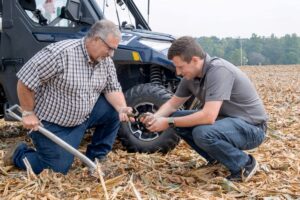
Indiana’s Farm Advisors Mentoring Program Flattens Learning Curve for Regenerative Agriculture
If someone asked you to name five winners from this year’s Winter Olympics, could you identify them? But if someone asked about your five favorite teachers from your entire school career, could you name them immediately? Our favorite teachers–and their lessons–stick with us. So do lessons from mentors. Farm Advisors in Indiana recognizes the importance…

CTIC Welcomes New Member Organizations
CTIC is proud to welcome four new member organizations to its growing roster of multidisciplinary stakeholders to support our shared mission of supporting farmers in their adoption and expansion of regenerative agricultural practices. Nuveen Natural Capital, Landoption, Terion AI, and Millborn Seeds have become first-time members of CTIC and are eligible for Board Director positions…