
New Study Evaluates Performance of Cover Crops in Different Geographies
Risk Management & Resiliency, Soil Health & Stability

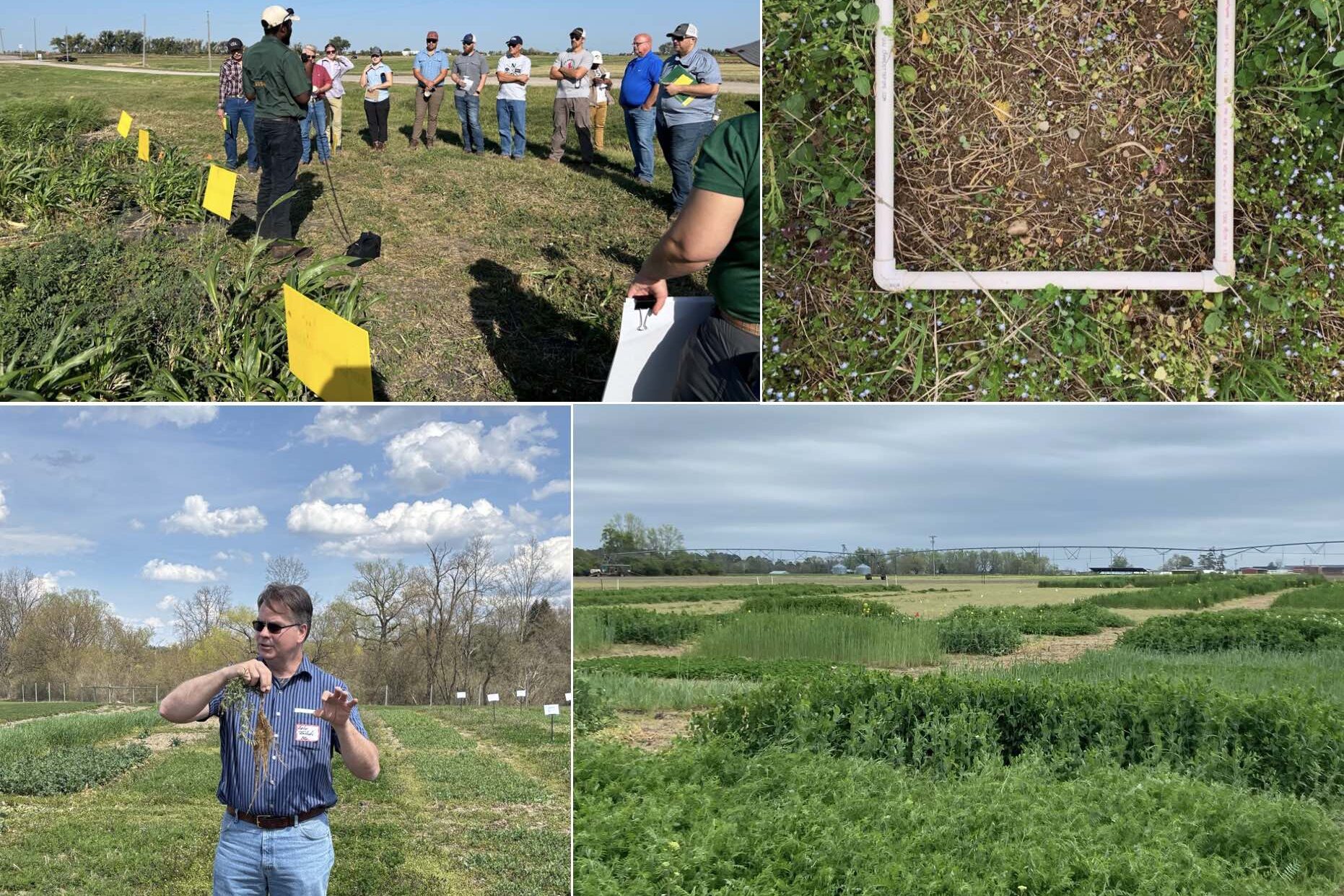
The University of Missouri’s Center for Regenerative Agriculture released its first National Cover Crop Variety Test Report in July.
The National Cover Crop Variety Testing Program is working to identify how new and existing cover crop varieties perform in a wide variety of locations across the country to help farmers, crop advisers, and members of the seed industry with decision-making. In its first report, data from 11 states are provided for 25 different varieties representing six different cover crop species during the 2024-2025 growing season for cover crops.
“The data we report on includes cover crop biomass, winter survival, flowering date, and other observations, such as weed control and plant disease occurrence where relevant,” says Etienne Sutton, Program Manager for the project. “Weather data for each test location is also included in the report.”
The project will continue to expand the number of varieties tested in support of further cover crop adoption, says Rob Myers, Project Leader and Director of the MU Center of Regenerative Agriculture.
In addition to Sutton and Myers, senior authors of the report include North Carolina State University’s Chris Reberg-Horton, Alyssa Woodard, and Esleyther Henriquez Inoa.
The MU Center worked closely with the American Seed Trade Association (ASTA) and more than a dozen partner organizations that included seed companies, land-grant universities, as well as USDA’s Agricultural Research Service and Natural Resource Conservation Service. The program is funded through a $10-million USDA Sustainable Agricultural Systems award.
“This project has been a great example of a public-private partnership effort that will pay economic and conservation dividends for farmers across the country, providing valuable information that enhances their conservation efforts,” says ASTA President and CEO Andy LaVigne.
In addition to testing cover crop varieties in public trials, the National Cover Crop Variety Development Project is conducting breeding efforts to develop new cover crop varieties with superior traits, evaluating root growth and forage quality of new varieties, helping more farmers learn how to become cover crop seed producers, and working to advance overall adoption of improved cover crop varieties.
Categories

Sign up for our Newsletter

June 2026 | Raleigh, North Carolina
Conservation in Action Tour | America’s Premier On-Farm Experience
Related News
Indiana’s Farm Advisors Mentoring Program Flattens Learning Curve for Regenerative Agriculture
If someone asked you to name five winners from this year’s Winter Olympics, could you identify them? But if someone asked about your five favorite teachers from your entire school career, could you name them immediately? Our favorite teachers–and their lessons–stick with us. So do lessons from mentors. Farm Advisors in Indiana recognizes the importance…

CTIC, SARE, and USDA Unveil 2026 Cover Crop Report at Farm Progress Show; Publish Webinar and Presentation
Results of the 2026 National Cover Crop Report indicate strong interest in cover crops among many farmers who produce a wide range of crops and livestock. Among respondents to the national survey, the average acreage planted with cover crops was 397.9, and their projections anticipate crossing the 400-acre mark by next year, a 33% increase…

2026 National Cover Crop Report Shows Continued Expansion Of Cover Crop Use, Including Cover Crop Grazing, Use Of Drones, And Planting Patterns
Farmers with 10+ years of experience help provide insights into incentive program design, monetization, and management practices that drive returns on investment. INDIANAPOLIS — Results of the 2026 National Cover Crop Report released Sept. 1 at the Farm Progress Show indicate strong interest in cover crops among many farmers who produce a wide range of…