
CTIC Board Chair Sets Priorities for 2026-2028 Term
CTIC News

Kellis Moss is one of the country’s leading public policy experts on wetland habitat. As Managing Director of Federal Affairs for Ducks Unlimited, he spends his days helping legislators, agencies, administrations, and partners understand policies that support wetland conservation and safeguard habitat for migratory waterfowl.
Supporting conservation on private lands is a critical part of DU’s mission, and DU’s agriculture programs offer technical and financial assistance designed to improve agricultural productivity and protect vital habitats. The organization’s agriculture expertise focuses on soil health, land protection, rice stewardship, and grazing systems, with nearly 900 wildlife biologists, engineers, GIS experts, and land professionals working with farmers to implement practices that are tailored to their unique operations.
“We want to make sure it’s financially feasible to keep farmers farming and conserving wetlands on their farm operations. Perpetual ag and conservation easements are great tools for both,” Moss says. “Producers get a one-time upfront payment to either keep their farm in farming or to protect certain aspects of their property, like wetlands or grasslands, and generally keep doing exactly what they’re doing.”
Ducks Unlimited has restored or protected more than 20 million acres thanks to contributions from more than a million supporters.
Partnerships Drive Progress
In May, the National Fish and Wildlife Foundation—the country’s largest private conservation foundation—awarded two grants totaling $1.5 million to DU for projects in Kansas and Iowa, part of an $8.7-million award to eight states that will help generate an additional $6.4 million in matching contributions for a total of $15.1 million earmarked specifically to support voluntary conservation practices on agricultural and ranching lands in the Midwest and West.
Earlier in 2026, DU and Syngenta announced the expansion of their collaboration, enabling seed production growers to adopt regenerative agriculture practices across key Midwest states. The collaboration represents a significant step toward Syngenta’s sustainability goal of 85% of the company’s seed production being grown using regenerative agriculture practices by 2030, with DU supporting the initiative as a technical assistance provider for seed producers.
As DU establishes partnerships in public, private, and nonprofit sectors, Moss says it’s critical for farmers and ranchers to evaluate conservation incentives and cost sharing to help offset the financial headwinds they’re experiencing in the marketplace today.
“There’s no reason to leave conservation payments on the table, as they can be an important part of a farm’s business income stream,” he says. “Given the value conservation practices bring to taxpayers and the general public, we want to continue making it more valuable for producers to adopt conservation practices that will also help their bottom line.”
Moss was elected Board Chair of CTIC earlier this year, and he shared his vision for his 2-year term and the value of being part of the 45-year-old, multi-sector membership organization that champions farmer-led, voluntary conservation that prioritizes pragmatic and profitable management practices.
CTIC: Why has DU been a loyal CTIC member through the years? What does CTIC do that DU can’t do on their own?
Moss: CTIC just does such a great job of communicating at the farmgate level. A former CEO would always say, “We cannot accomplish our mission if the farm gates are closed.” The vast majority of wetlands in conservation that are possible for us to work on are on private land.
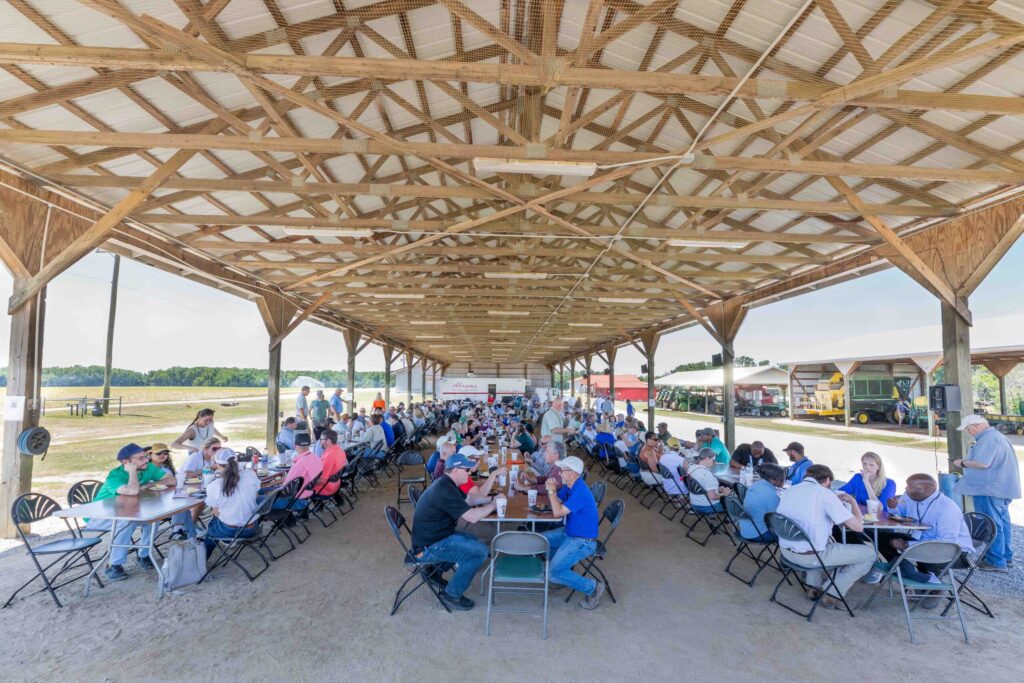
CTIC is a powerful convener of people from all walks of life and all sectors of ag. The Conservation in Action Tour is a great example of that. When you have all of the segments from agribusiness to researchers—and of course the farmers—riding on the bus together across the countryside, getting the opportunity to meet and learn from one another, there’s nothing better than that.
Ultimately, CTIC broadens perspectives no matter who you are or what you do.
CTIC: What is it like sitting on a board that is so diverse in job functions and how their respective organizations serve agriculture?
Moss: I’ve learned so much from my fellow board members, who are doing vastly different things on their day-to-day than I am. I’m pretty focused on policy and wetlands. I don’t always see the economics at the farm gate like folks in the inputs sector, for example. But together we can use CTIC as a platform to be sure we’re serving the farm community in ways that are most beneficial in real time.
It’s enlightening. The great diversity of perspectives that we collectively bring to the board is a real strength of CTIC, and there’s a real value in that.
CTIC: So what’s next for CTIC under your leadership?
Moss: I’m riding the coattails of the great work of my predecessors, and I’m trying to keep that momentum moving forward as outlined in our Strategic Plan.
There is a real opportunity to mobilize the talent, advice, and expertise of the board we have today. The more engagement we can drive with this talent pool of people, the more success we’ll have as an organization and the more rewarding it will be for all of us who serve.
CTIC: Are there other members or prospects who can add additional value to the board and to CTIC’s mission?
Moss: Absolutely. Our member organizations and board members work with a wide array of organizations and corporations that provide additional perspectives, funding, and similar missions of supporting farmers so they remain profitable while safeguarding our country’s natural resources.
We’re doing great work. We’re growing, connecting with more producers at the field level, and expanding opportunities for corporate engagement. Don’t miss the train. The next couple of years are going to be a really fun ride as we scale the ongoing explosion of conservation. CTIC’s credibility is a really important part of that equation, both at the farm level and as a coalition builder among all sectors of the food and agriculture value chain. It is the center of the wheel that gives the spokes their connection and allows them to function as one.
Categories

Sign up for our Newsletter
June 2026 | Raleigh, North Carolina
Conservation in Action Tour | America’s Premier On-Farm Experience
Related News

CTIC, SARE, and USDA Unveil 2026 Cover Crop Report at Farm Progress Show; Publish Webinar and Presentation
Results of the 2026 National Cover Crop Report indicate strong interest in cover crops among many farmers who produce a wide range of crops and livestock. Among respondents to the national survey, the average acreage planted with cover crops was 397.9, and their projections anticipate crossing the 400-acre mark by next year, a 33% increase…

2026 National Cover Crop Report Shows Continued Expansion Of Cover Crop Use, Including Cover Crop Grazing, Use Of Drones, And Planting Patterns
Farmers with 10+ years of experience help provide insights into incentive program design, monetization, and management practices that drive returns on investment. INDIANAPOLIS — Results of the 2026 National Cover Crop Report released Sept. 1 at the Farm Progress Show indicate strong interest in cover crops among many farmers who produce a wide range of…

Share Your Conservation Story at the 20th Annual Conservation in Action Tour in Wisconsin
At the 19th annual Conservation in Action Tour in North Carolina, we heard from more than ten producers representing eight crops on topics like conservation practices in cotton to equipment modifications for a soil health system. As we plan our landmark 20th annual Conservation in Action Tour, we would love to continue hearing producers’ on-the-ground experience. To…