
Diverse Corn Belt
Project

The Diverse Corn Belt (DCB) is a multidisciplinary project exploring alternative crops, longer rotations, and integrating livestock and perennials that could help increase resilience in Midwest agriculture – is seeking farmer input through focus groups and in-field research. The project’s 30 partners are exploring diversification at the farm, market, and landscape level that can broaden new opportunities for Midwest farmers and rural communities, says Dr. Linda S. Prokopy of Purdue University, who leads the five-year, $10 million project.
The study focuses on Indiana, Illinois, and Iowa. The team will conduct research, extension, and modeling in all three states.
Prokopy says farmers can participate in the Diverse Corn Belt in a variety of ways, including:
- Focus groups, in which producers with a wide range of approaches—from traditional corn/soybean rotations to highly diversified operations—gather to discuss the challenges and opportunities posed by diversification.
- Hosting in-field research, allowing agronomists, entomologists, hydrologists and soil scientists to study farmers’ existing management systems, ranging from conventional corn/soybean rotations to more complex cropping and/or grazing systems. Host producers will not be asked to change their management; researchers will share and help interpret data produced on participating farms.
- Joining Reimagining Agricultural Diversification (RAD) Teams, engaged conversations among producers, agricultural advisors, community leaders, and others. RAD Team members will work closely with the research team—and each other—over the next five years to share their insight on research findings, explore policy implications, and envision what the agricultural landscape of the Midwest should look like in the future.
The Diverse Corn Belt project is funded by the USDA National Institute of Food and Agriculture through an Agriculture and Food Research Initiative competitive grant. Members of the research team represent land grant institutions, federal agencies, and non-profit organizations. CTIC is helping with communications for the project.
Interested farmers and other stakeholders can learn more about the Diverse Corn Belt project at diversecornbelt.org, and volunteer to participate at https://bit.ly/GoDCB.
Current Projects
Past Projects

Sign up for our Newsletter
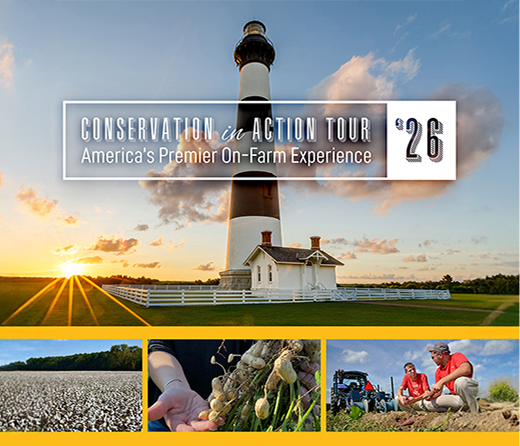
June 2026 | Raleigh, North Carolina
Conservation in Action Tour | America’s Premier On-Farm Experience
Related News

Farm Stops Set for Conservation in Action Tour
Attendees will take a deep dive into the data and technical assistance driving North Carolina’s diverse rotations and cropping systems that include cotton, soybeans, corn, tobacco, strawberries, sweet potatoes, peanuts, and watermelon. Innovation, profitability, and technology in conservation agriculture will take center stage during the 19th annual Conservation in Action Tour June 3-4 in and around Raleigh, N.C. …

Farmer Feedback Needed for the National Cover Crop Survey
Farmers across the U.S.—whether they use cover crops, formerly used them, or have never planted covers—are invited to share their insights on cover crops in the National Cover Crop Survey being conducted by the Conservation Technology Information Center (CTIC), the USDA’s Sustainable Agriculture Research and Education (SARE) Program, and the American Seed Trade Association (ASTA).…

RFP Open Through April 8 for Cover Crop Enrollment Partnership Program
CTIC is seeking partners capable of providing targeted, network-based engagement that identifies, qualifies, and connects high-quality farmer prospects for enrollment in the Farmers for Soil Health program. The Conservation Technology Information Center (CTIC) is seeking proposals from qualified vendors to participate in its Cover Crop Enrollment Partnership Program. Through this program, CTIC aims to collaborate…