
New Study Evaluates Performance of Cover Crops in Different Geographies
Risk Management & Resiliency, Soil Health & Stability

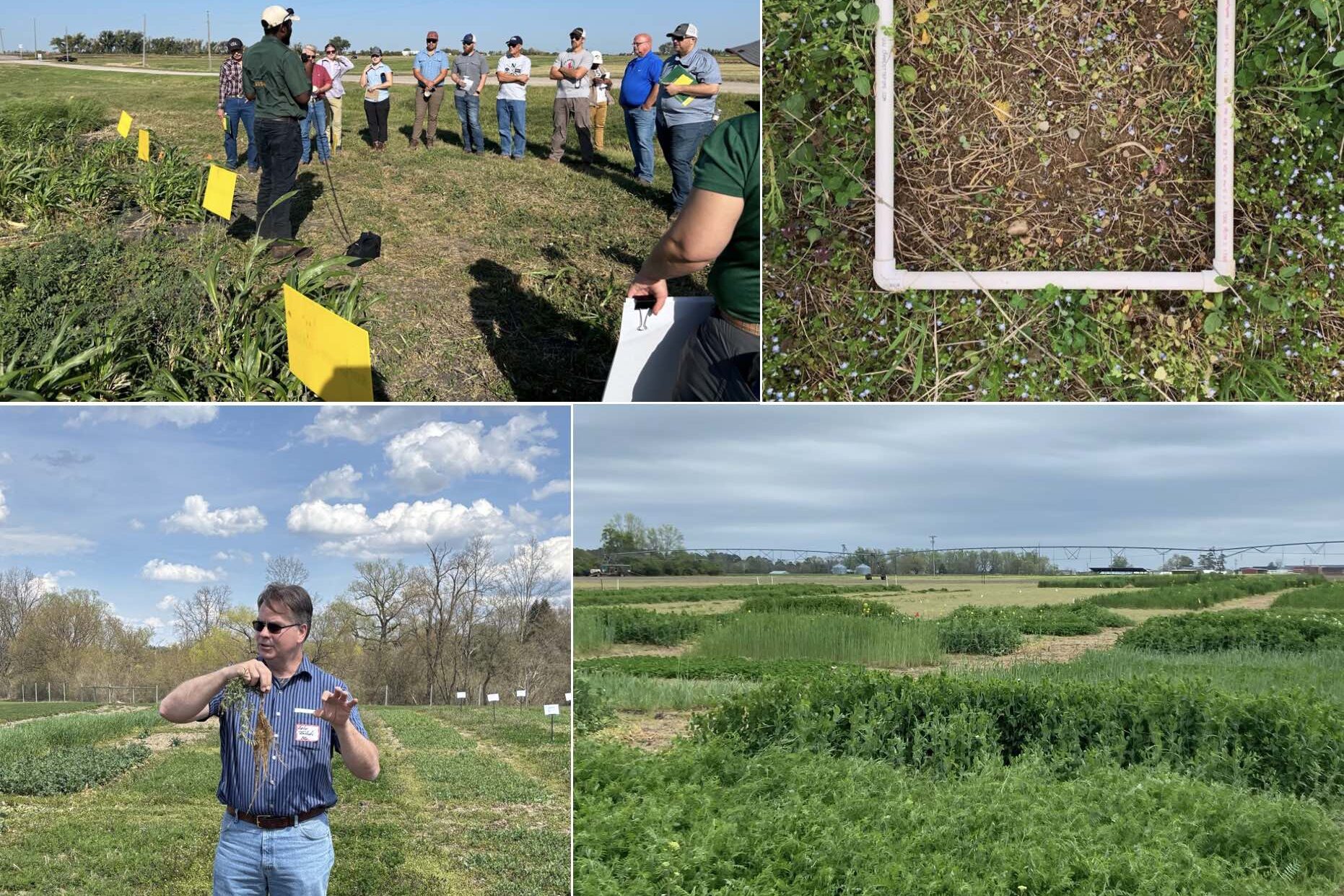
The University of Missouri’s Center for Regenerative Agriculture released its first National Cover Crop Variety Test Report in July.
The National Cover Crop Variety Testing Program is working to identify how new and existing cover crop varieties perform in a wide variety of locations across the country to help farmers, crop advisers, and members of the seed industry with decision-making. In its first report, data from 11 states are provided for 25 different varieties representing six different cover crop species during the 2024-2025 growing season for cover crops.
“The data we report on includes cover crop biomass, winter survival, flowering date, and other observations, such as weed control and plant disease occurrence where relevant,” says Etienne Sutton, Program Manager for the project. “Weather data for each test location is also included in the report.”
The project will continue to expand the number of varieties tested in support of further cover crop adoption, says Rob Myers, Project Leader and Director of the MU Center of Regenerative Agriculture.
In addition to Sutton and Myers, senior authors of the report include North Carolina State University’s Chris Reberg-Horton, Alyssa Woodard, and Esleyther Henriquez Inoa.
The MU Center worked closely with the American Seed Trade Association (ASTA) and more than a dozen partner organizations that included seed companies, land-grant universities, as well as USDA’s Agricultural Research Service and Natural Resource Conservation Service. The program is funded through a $10-million USDA Sustainable Agricultural Systems award.
“This project has been a great example of a public-private partnership effort that will pay economic and conservation dividends for farmers across the country, providing valuable information that enhances their conservation efforts,” says ASTA President and CEO Andy LaVigne.
In addition to testing cover crop varieties in public trials, the National Cover Crop Variety Development Project is conducting breeding efforts to develop new cover crop varieties with superior traits, evaluating root growth and forage quality of new varieties, helping more farmers learn how to become cover crop seed producers, and working to advance overall adoption of improved cover crop varieties.
Categories

Sign up for our Newsletter

June 2026 | Raleigh, North Carolina
Conservation in Action Tour | America’s Premier On-Farm Experience
Related News

Farmer Feedback Needed for the National Cover Crop Survey
Farmers across the U.S.—whether they use cover crops, formerly used them, or have never planted covers—are invited to share their insights on cover crops in the National Cover Crop Survey being conducted by the Conservation Technology Information Center (CTIC), the USDA’s Sustainable Agriculture Research and Education (SARE) Program, and the American Seed Trade Association (ASTA).…

RFP Open Through April 8 for Cover Crop Enrollment Partnership Program
CTIC is seeking partners capable of providing targeted, network-based engagement that identifies, qualifies, and connects high-quality farmer prospects for enrollment in the Farmers for Soil Health program. The Conservation Technology Information Center (CTIC) is seeking proposals from qualified vendors to participate in its Cover Crop Enrollment Partnership Program. Through this program, CTIC aims to collaborate…
EPA’s Dicamba Approval Carries First-Ever Conservation Requirements
The U.S. Environmental Protection Agency’s Feb. 6 approval of over-the-top dicamba applications on cotton and soybeans establishes field-level conservation requirements when using the pesticide. It’s the first time the agency has implemented mandatory label requirements. Under the 2026 EPA registration for over-the-top dicamba on soybeans and cotton, farmers must: These practices are intended to reduce…